Older Than the App Store: Five Forgotten Gates Into Deep Stillness
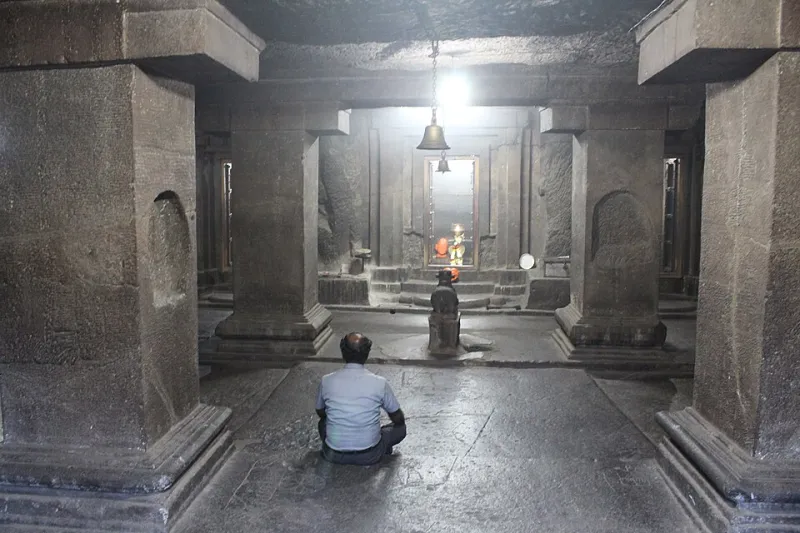
Photo: Haripriya 12, CC BY-SA 4.0, via Wikimedia Commons
Let's be honest: mainstream wellness has a bit of a sameness problem. Another subscription app. Another 21-day challenge. Another downward dog at a studio that also sells $9 smoothies.
None of it is bad. It's just... shallow water. And some of us came to the shore looking for the deep end.
The good news is that the deep end has been mapped before — by monks, hermits, shamans, and wanderers across centuries and continents. Their methods were never lost, exactly. Just misplaced in the noise of the modern feed. Here are five of them, and how to bring each one into an ordinary American life.
1. Hesychasm: The Practice of the Quiet Heart
Where it comes from: The word hesychasm comes from the Greek hesychia — stillness, rest. It grew out of Eastern Orthodox Christian monasticism, particularly on Mount Athos, where monks practiced sitting alone in a darkened cell, repeating a short prayer (often the Jesus Prayer: "Lord Jesus Christ, have mercy on me") in rhythm with the breath.
The core move: Repetition until the prayer drops from the head into the heart. The monks described it as prayer becoming self-acting — a hum beneath your thoughts rather than one more thought among thousands.
How to adapt it: Pick a single short phrase that carries meaning for you — sacred or secular. Sit in a dim room. Synchronize the phrase with your breath: one line on the inhale, one on the exhale. Twenty minutes. No podcast, no guidance track. The repetition is the guidance. Expect boredom around minute six. Push through it; boredom is often just stillness wearing an uncomfortable costume.
2. Trance Chanting: The Voice as a Vehicle
Where it comes from: Nearly every culture found the same secret: the human voice, sustained in rhythm, can carry a person somewhere else. Kirtan in the bhakti traditions of India. The throat singing and overtone chanting of Tuva and Tibet. The long, hypnotic liturgical chants of the Ethiopian and Byzantine churches. Even the gospel traditions of the American South know this current.
The core move: Chanting isn't performance. It's vibration as transport. When the voice sustains a tone long enough, the breath deepens, the thinking mind loses its grip, and something more like a hum of being takes over.
How to adapt it: You don't need a beautiful voice — you need a stubborn one. Choose one syllable ("om," "ah," or even a simple drone) and sustain it for ten to fifteen minutes. Let it crack. Let it waver. Better yet, find a local kirtan or chant circle — they exist in nearly every mid-sized American city now — because trance states deepen in groups. The point is duration, not melody.
3. Breath-Synchronized Walking: The Mobile Meditation
Where it comes from: The Thai forest monks called it jongrom — walking meditation practiced on long forest paths, pacing back and forth for hours. Zen traditions developed kinhin, slow walking between sitting periods. And in the Andes and the Himalayas, pilgrims have long matched breath to stride across entire mountain ranges.
The core move: The walk isn't about getting anywhere. The breath and the step become one rhythm, and the body becomes the mantra.
How to adapt it: This one is perfect for American life because it hides in plain sight. Find a quiet stretch — a park loop, a hallway, a beach at dawn. Count your steps per breath until you find a natural ratio (often four steps in, four steps out). Then drop the counting and just keep the rhythm. Twenty minutes of this will settle you more than forty minutes of distracted sitting. Bonus: it's the rare meditation that doubles as exercise your doctor would approve of.
4. Tenebris: Intentional Darkness Meditation
Where it comes from: Darkness retreats have deep roots. The sweat lodge traditions of various Native American peoples work with profound darkness and enclosure. Tibetan Dzogchen has its dark retreat (mun mtshams), traditionally 49 days. Even the ancient Desert Fathers sat in caves where night was the only companion.
The core move: Remove light, and the mind — deprived of its favorite toy, vision — turns inward with startling force. What surfaces first is usually restlessness. What surfaces after that is the interesting part.
How to adapt it: You don't need a 49-day commitment or a retreat center in Guatemala. Start with one hour in a properly dark room (blackout curtains, towel under the door). Sit or lie down. Let your eyes adjust and simply observe what the mind does in the absence of images. Work up to a full night, then a full day if it calls to you. A word of honesty: darkness amplifies whatever you bring into it. If you're in a rough emotional season, bring a friend nearby or work with a teacher first.
5. The Silence Fast: A Day Without Words
Where it comes from: Monasteries have practiced periods of silence for over a thousand years — the Trappists famously maintain near-constant silence as a way of life. The Quaker tradition holds silence at the center of communal worship. And modern silent retreats, like those at Spirit Rock in California or the Insight Meditation Society in Massachusetts, sell out months in advance.
The core move: Speech is a constant, low-grade labor. Silence it, and you discover how much of your mental churn exists to rehearse conversation. What's left when the commentary stops is often the quietest, strangest, most restful self you've met in years.
How to adapt it: Try a half-day first. A Saturday morning, sunrise to noon, no speaking — and just as importantly, no texting, no scrolling, no podcasts. Tell the people you live with so they don't think you've lost it. Notice the urges to speak that arise and pass. They always pass. Work up to a full day, and if it grips you, a weekend retreat with a meditation center is the natural next step.
The Common Thread
Notice what all five practices share: none of them can be done halfway. Hesychasm asks for repetition until it hurts a little. Darkness asks you to sit with yourself with nowhere to hide. Silence asks you to stop performing for an audience of zero.
That's why they feel so different from the app store version of wellness. These aren't productivity hacks with incense. They're gates, and gates require that you actually walk through.
Pick one. Just one. Give it thirty days.
The old practitioners would tell you what they always told their students: the door has been there the whole time. It's the walking through that changes everything.