The Hour of the Liver: Why You Keep Waking at 3 A.M. and What the Night Is Asking of You

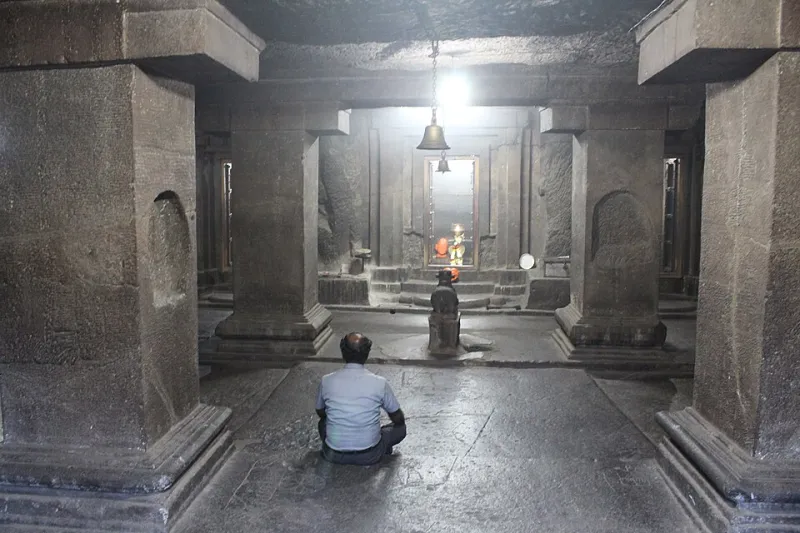
Photo: BarelyawakeFL, CC0, via Wikimedia Commons
There's a particular loneliness to 3 A.M. The house is silent, the streetlights hum outside, and your phone screen feels too bright and too judgmental as you check the time for the fourth night in a row. Same hour. Again.
If this sounds familiar, you're in good company. Across the country — from restless apartments in Chicago to quiet porches in Georgia — millions of Americans find themselves wide awake in the small hours, staring at the ceiling and wondering what's wrong with them. The answer, according to both ancient healing traditions and contemporary physiology, might be: nothing. Something might just be trying to speak.
The Body Has a Schedule
Practitioners of Traditional Chinese Medicine have long mapped the night into a sequence of two-hour windows, each governed by a different organ system. In this framework, roughly 1 to 3 A.M. belongs to the liver — the great detoxifier, the storehouse of what the tradition calls hun, the ethereal soul that roams during dreams. The hours that follow, 3 to 5 A.M., belong to the lungs, associated with grief and the breath that releases it.
You don't have to accept the metaphysics wholesale to find something useful here. The core idea is elegant: different kinds of inner work happen at different times of night, and what surfaces at 3 A.M. may not be random. It may be whatever you didn't have time or courage to process during daylight hours.
What the Lab Coat Says
Modern science offers a parallel story. Sleep researchers have known for decades that sleep moves through cycles, and that around the 3 A.M. mark, many people surface from deep sleep into lighter stages — a natural checkpoint. Cortisol, the stress hormone, begins its slow pre-dawn climb in these hours, priming the body to wake.
Here's the catch: if your nervous system spent the previous day marinating in low-grade stress — a tense meeting, an unanswered email from your sister, the drip-drip of the news cycle — that cortisol rise can arrive early or hit harder, and suddenly you're upright at 3:07 A.M. with a heart that's beating just a little too fast.
In other words, the ancient map and the modern lab agree on the essentials: the pre-dawn hours are when the body does its accounting. And unprocessed stress is the bill that comes due.
Stop Fighting, Start Listening
The instinct, of course, is to battle. To lie there commanding yourself to sleep, checking the clock, calculating how many hours remain before the alarm. Anyone who's done this knows it's like trying to fall asleep during a fire drill.
What if, instead, you treated the waking as an appointment? Not one you asked for, necessarily — but one you can keep.
Three Practices for the Small Hours
1. The 3 A.M. Journal. Keep a notebook and a dim pen light on the nightstand. When you wake, before reaching for your phone, write three lines: what you're feeling, where you feel it in your body, and one question you're carrying. Don't answer it. Just name it. Over a couple of weeks, patterns tend to emerge — and patterns are where the real information lives.
2. The Long Exhale. In Chinese medicine, the lungs govern release. In practical terms, extended exhales signal the vagus nerve that you're safe. Try breathing in for a count of four and out for a count of eight, ten times. It won't always put you back to sleep, but it reliably downshifts the panic that makes 3 A.M. feel like an emergency.
3. The Kindness Rehearsal. Ask yourself: what would I say to a friend who called me at this hour, scared and sleepless? Then say it to yourself. It sounds almost embarrassingly simple, but self-compassion in the dark hours is a skill, and like any skill, it builds with repetition.
When It's More Than a Message
A gentle but necessary note: occasional 3 A.M. wakings are human. But if you're waking nightly for weeks, if daytime exhaustion is compounding, or if a low mood has settled in like a houseguest who won't leave, that's worth a conversation with a doctor or therapist. Holistic practice and professional care aren't rivals — they're companions.
The Gift Hidden in the Dark
There's a reframe worth sitting with. Most of us live our entire lives on daylight terms — schedules, notifications, other people's needs. The pre-dawn hours are one of the few thresholds where the ordinary world goes quiet enough for something deeper to be heard. Mystics across traditions have prized the hours before sunrise for exactly this reason; monks have been rising at 3 A.M. for centuries, not because they couldn't sleep, but because they understood what those hours hold.
Your 3 A.M. waking may simply be your body misfiring on stress hormones. It may be your liver, in the poetic language of an old tradition, asking to be heard. Either way, the invitation is the same: don't just endure the dark hours. Listen to them. The night, it turns out, has been trying to tell you something all along.