Your Old Journal Is Not Evidence: A Gentle Ritual for Meeting the Person You Used to Be
There is a particular kind of dread that lives in a closet shelf. It is soft, dust-jacketed, and usually spiral-bound. You know the notebook is there. You have moved it from apartment to apartment, from the nightstand to the junk drawer to the bottom of a tote bag from a conference you barely remember. Every so often you pull it out, flip it open, and immediately close it again—as if the pages might bite.
That dread is not really about the writing. It is about the audience. When you reread an old journal, you are not just reading words. You are sitting across from a version of yourself who did not know what you know now. And too often, we treat that person like a defendant.
The Notebook Is Not a Courtroom
We tend to read old entries the way a prosecutor reads a transcript. Here is the evidence of your bad decisions. Here is the proof that you were naive, dramatic, repetitive, or wrong about almost everything. Here is the paragraph where you swore you would never do the thing you did three months later.
The problem is not that the past self made mistakes. The problem is the tone of the cross-examination. Judgment closes the door. Curiosity opens it.
This is where the old practice of inner hospitality comes in. Not nostalgia—nostalgia is a soft-focus filter that turns the past into a souvenir. Not self-criticism—that is just the same courtroom with better lighting. Hospitality means you welcome the person who wrote those pages the way you would welcome a guest who arrived at your door in the rain. You do not hand them a list of their failures. You offer them a chair.
One Entry, Not the Whole Book
The mistake most of us make is trying to read the entire notebook at once. That is like inviting every version of yourself to the same dinner party and expecting it to go well. It will not. The seventeen-year-old will argue with the twenty-eight-year-old. The one who was heartbroken will not stop crying. The one who thought they had it all figured out will be insufferable.
So start smaller. Choose one entry. Not the most dramatic one. Not the one you have been avoiding for years. Pick a Tuesday. Pick a paragraph. Pick the page that fell open when you were not trying.
Sit somewhere comfortable—not your desk, if your desk is where you do your taxes. A kitchen table is fine. A porch step is better. Put your phone in another room. This is not a productivity exercise. It is a visit.
A Ritual for Rereading
First, read the entry out loud. Quietly, under your breath, but out loud. You will notice things your eyes skip over. You will hear the rhythm of the person you used to be. Maybe they wrote in fragments. Maybe they were trying to sound like a philosopher. Maybe they were just tired.
Second, notice what your body does. Does your jaw tighten? Does your chest feel heavy? Do you want to laugh? These are not distractions. They are data. The body often remembers what the mind has edited out.
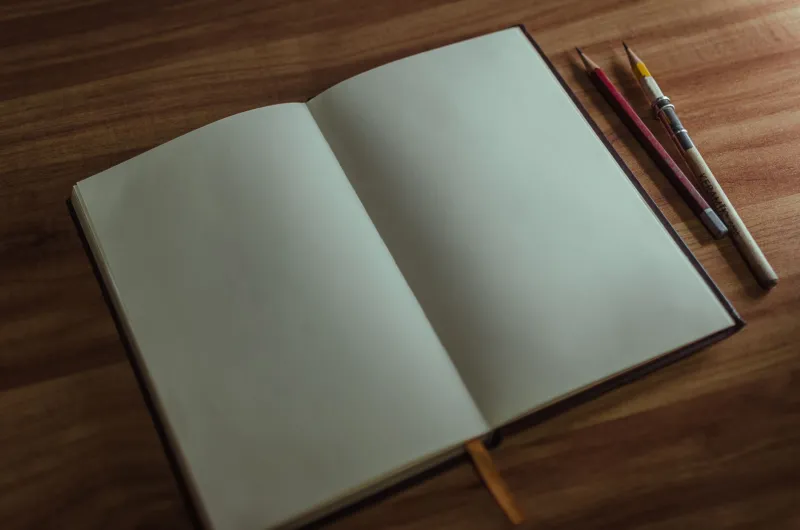
Third, take a pencil—not a pen, because pencil feels like it can be revised—and underline the fears and desires that repeat. Not the events. The events are just the scenery. Look for lines like I am afraid I will always feel this way. Or I want to be seen. Or I do not know how to stop performing. You will be surprised how often the same fear shows up in different costumes across the years.
Fourth, write a short letter back. Not a manifesto. Not a correction. A letter. Three or four sentences is enough.
What to Say in the Letter
Begin with what you notice. I see that you were scared. I see that you were trying. I see that you did not have the words yet.
Then offer something you know now—but keep it small. You do not need to tell your past self the ending of the story. That is not helpful. What helps is a single sentence of witness: That fear did not last forever. Or You were not as alone as you felt. Or The thing you were afraid to want was actually the right thing to want.
End with a blessing, even if you are not the blessing type. May you be gentle with yourself tonight. May you find one person who understands. May you keep writing, even when it feels like no one is reading.
The letter is not magic. It will not retroactively heal anything. But it does something quieter. It closes the loop between then and now. It lets the past self know they were not writing into a void. Someone was listening. You were listening.
When the Entry Is Painful
Some entries are not awkward. Some are grief. Some are shame. Some are the kind of pages you wrote at 3 a.m. when you were not sure you wanted to keep going.
If you find one of those, stop. You do not have to finish the ritual. You do not have to write a letter. You can close the notebook and make a cup of tea and sit with the fact that you survived the night you were writing about. That is enough. Hospitality also means knowing when to let a guest rest.
If reading old entries stirs up more than you can hold alone, that is not a failure of the practice. It is an invitation to bring a therapist or a trusted friend into the room. The inner sanctum is not a locked room. It has a door, and you are allowed to open it.
The Person Who Shares Your Handwriting
The stranger in the notebook is not a stranger. They are you, before the lesson. They are you, in the middle of the lesson. They are you, hoping the lesson would be over soon.
When you read them with curiosity instead of judgment, you are not indulging the past. You are practicing a kind of communion that does not require a church. You are saying, without saying it, I am still here. You are still here. We made it this far.
So pull out the notebook. Pick one page. Read it like you are meeting someone for coffee, not like you are preparing a case. Write back. Keep it short. Keep it kind.
The person who shares your handwriting has been waiting a long time to be welcomed. You are the only one who can do it.