Ten Minutes in the Driveway: The Closing Ritual Hiding in Your Car
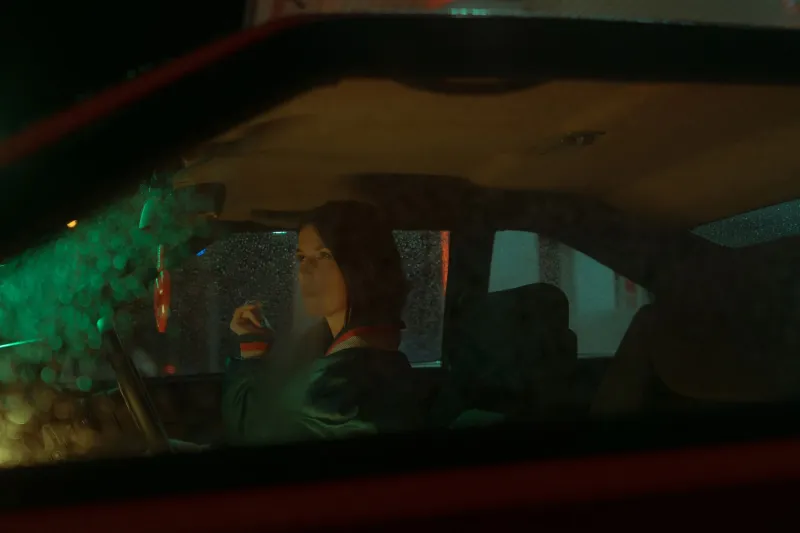
There is a moment most of us know and almost none of us name. You pull into the driveway, cut the engine, and just sit there. The radio goes quiet. The house is right in front of you. And for a few seconds—sometimes a few minutes—you don't move.
Most people call that procrastination. Or exhaustion. Or the specific dread of walking into a kitchen that needs dinner started. But I've come to think of it as something else entirely: a threshold that's already been built for us, sitting there in the driveway, waiting to be used on purpose.
The Car Was Never Just a Car
Think about what actually happens in a car. You cry in them. You rehearse hard conversations in them. You pray in them, or something close to praying. You sing badly and mean it. You take phone calls you'll remember for years, parked in a grocery store lot with the engine idling.
That's not incidental. A car is one of the last genuinely private rooms most Americans have access to—a small, moving, soundproofed space that belongs to no one else's expectations. It isn't home, and it isn't work. It's the corridor between them. In older spiritual language, that's a liminal space: a place where the rules loosen and the self gets a little slippery.
Liminal spaces are useful. They're also uncomfortable, which is why we usually fill them with podcasts and drive-thru coffee. But if you leave one empty on purpose, it starts doing what thresholds are supposed to do—it helps you cross.
Why the Parking Lot Is Better Than the Front Door
Walking straight from a difficult meeting into "how was your day" is a kind of violence we commit against ourselves, gently, every evening. The workday self—the one who is clipped and efficient and slightly defensive—doesn't get to change clothes. It just walks in and sits down at the table.
A few minutes of deliberate pause changes that. Not dramatically. You're not going to levitate. But you give the nervous system a chance to register that the hallway is over.
The final red light works too. So does the school pickup line, the parking garage at the gym, the strip of curb outside your apartment. The car doesn't have to be parked in a driveway with a mailbox and a welcome mat. It just has to be stopped.
The Ritual Itself
This isn't complicated, and I'd gently suggest you resist the urge to make it complicated. Ten minutes. Four steps. That's the whole thing.
First, silence. Cut the engine if you can. Turn off the radio before you turn into the driveway, not after—the abrupt quiet is half the point. Let the car be quiet for a full minute, which will feel longer than a minute.
Second, breath. Not a breathwork practice. Just three slow exhales, longer than the inhales. Let your shoulders drop on the way out. If you're someone who holds tension in your jaw, unclench it now, deliberately, like you're setting down a bag.
Third, the naming. This is the part people skip and the part that matters most. Say, silently or out loud, what you are leaving in the car. Not a story—a list. The email you didn't send. The comment from a coworker that landed wrong. The low hum of not-enough that followed you all day. Name two or three things. Then say, plainly, this stays here until morning.
I know how that sounds. It sounds like a trick, and it is one, but it's an old trick. Naming a thing and assigning it a place is one of the oldest spiritual technologies we have. You're not pretending the feeling isn't real. You're refusing to carry it over the threshold.
Fourth, a gesture. Something small and physical to mark the end. A palm flat on the steering wheel. A hand over your heart for one breath. A whispered word—enough, or home now, or whatever word belongs to you. Ritual lives in the body, not the mind. Give your body the punctuation mark.
Then get out of the car. That's it. That's the whole ceremony.
For the Ones Who Work From Home
If your commute is twelve feet of hallway, this ritual still applies—arguably more so. The blurred boundary between work and home is its own kind of low-grade strain, and it doesn't announce itself. It just quietly makes everything feel like a Tuesday afternoon.
So borrow the car. Or borrow the porch. Or borrow the walk around the block that you take, not for exercise, but for the crossing. The physical container matters less than the fact that there is one. You need a place where the day ends, and if the day won't give you one, you build it out of ten minutes and a little intention.
One Small Warning
The car can become a waiting room just as easily as a sanctuary. If you find yourself sitting in the driveway for forty-five minutes every night, scrolling, that's not a threshold—that's avoidance, and it's worth being honest with yourself about which one you're doing.
The difference is simple. A closing ritual has an end. It empties you a little and sends you inside lighter. A waiting room just delays the crossing while the weight stays exactly where it was.
Ten minutes, then the door. That's the agreement.
The Overlooked Invitation
We tend to look for sacred space in cathedrals and mountaintops and retreat centers three states away, and we forget that the most ordinary objects in our lives are often the ones already set up for it. A parked car at dusk. A driveway. A final red light holding you still for forty seconds while the sky goes orange behind the strip mall.
It's not glamorous. It's not the kind of thing you'd post about. But the workday self has to be set down somewhere before the evening self can pick anything up—and the driver's seat, it turns out, is as good a place as any to do it.
Cut the engine. Take a breath. Name what you're leaving behind. Then walk inside.