Hearing Your Name Without Being Called
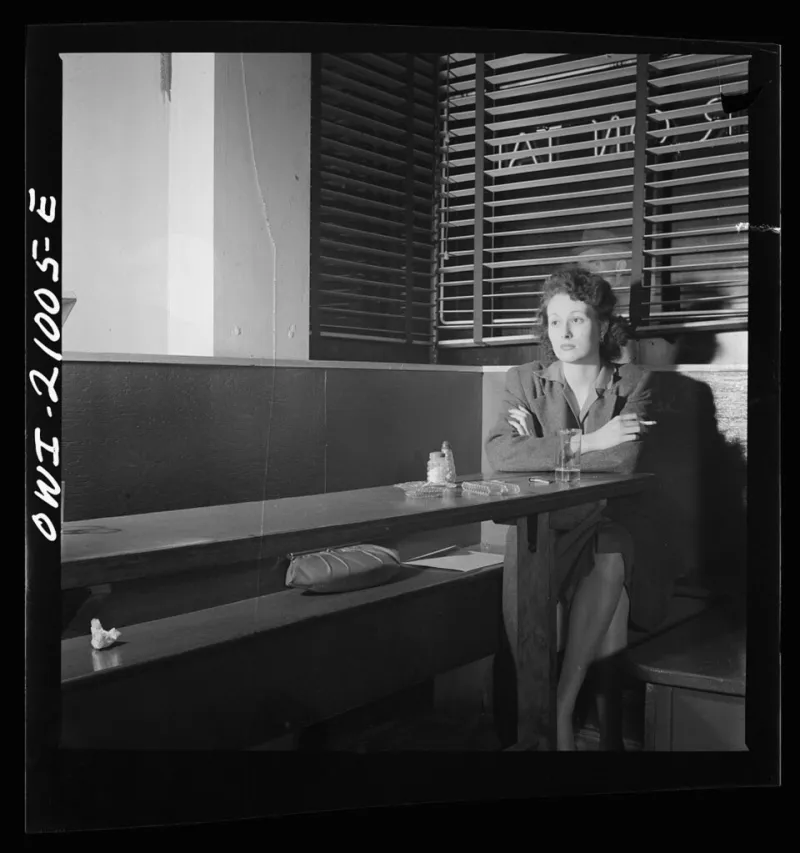
Photo: Esther Bubley, Public domain, via Wikimedia Commons
Most of us do not hear our own name very often. We see it printed on mail, typed into forms, whispered by a pharmacist. When it is spoken, someone usually wants something: a signature, a decision, an answer to a question we have not finished thinking about. The name becomes a handle — a way to get our attention before the real business begins.
That is not a tragedy. It is just how names work in a busy life. But there is another way to meet the word you have been answering to since childhood. You can sit down at the kitchen table, set a timer for ten minutes, and say it out loud. Slowly. Without needing to be anyone's anything. Not as an affirmation. Not as a branding exercise. Just as a sound that belongs to you.
The Name You Answer To Is Not the Whole Story
Your name arrived before you did. Maybe it came from a grandmother, a song, a saint, a season, or a compromise made in a hospital hallway. Maybe you were named for someone your parents loved, or someone they hoped you would become. Maybe your name was shortened before you could protest. Maybe a teacher mispronounced it for a whole school year and you learned to answer anyway.
By the time we reach adulthood, most of us have a complicated relationship with our own name. It carries family stories and family expectations. It holds the nickname a former partner used and the formal version a boss insists on. It remembers the moment you introduced yourself differently at a party, hoping to become someone else for the night. It also remembers the moments you shrank when it was called — the times you said that's me with a quiet sigh, already bracing for what came next.
This is one small way self-abandonment happens. Not in dramatic betrayals, but in the reflex of answering to a label while leaving the person behind it unattended. The name is not the problem. The problem is that we rarely hear it without being pulled somewhere.
A Ten-Minute Practice at the Kitchen Table
You do not need a cushion, incense, or a special playlist. A chair, a timer, and a little privacy will do. If you live with others, tell them you are taking ten quiet minutes. Put your phone face down. Sit comfortably, but not so comfortably that you drift off.
Start by saying your name out loud, plainly. Just the word. Notice how strange it sounds when no one is waiting for an answer. Say it again. Then a third time, slower. Let the sound fill the room rather than bounce off the idea of who you are supposed to be.
Next, try a simple sentence: I am here, and my name is —. Say it without performing it. If your voice feels flat or silly, that is fine. Flat and silly are also true. Let the sentence be ordinary.
Now bring to mind a version of your name you have not used in years. A childhood nickname. The way a grandparent said it. The spelling you wished you had. Say that version aloud, if you can, and notice what it stirs. You are not trying to reclaim it or reject it. You are simply letting it exist in the room.
For the last few minutes, sit in the silence after the sound. Listen as if your name were a bell that has just stopped ringing. Notice the quiet. Notice your breath. When the timer goes off, end with one plain sentence of thanks — not a grandiose affirmation, just something like thank you for hearing me.
What Might Surface
People often expect this practice to feel peaceful. Sometimes it does. Sometimes it feels awkward, or sad, or surprisingly tender. A name can open a drawer we forgot was full. You might remember being called in for dinner, or being called out in front of a class. You might feel the old ache of a nickname that was meant to be affectionate but landed as a correction. You might feel nothing at all, which is also information.
The point is not to force a revelation. The point is to stop treating your name as mere administration. In many contemplative traditions, a name is understood as a kind of threshold — not because the word is magic, but because it points at a life. To hear your own name without being called is to stand at that threshold for a moment. It is a way of saying: I am not only the person who responds. I am also the one who is here.
You Do Not Have to Love the Word
This is not a practice in self-branding. You do not have to decide your name is beautiful, powerful, or perfectly suited to you. You do not have to love the name your parents chose. You can hold mixed feelings and still practice recognition. The aim is not to admire the label. The aim is to hear the sound and let it land in a body that has been carrying it all along.
If your name feels heavy with old expectations, say it as a sound rather than a verdict. If it feels foreign on your tongue, say it anyway. If you go by a chosen name now, let that name have its turn too. The practice is flexible. What matters is the willingness to pause and listen.
Taking the Sound With You
Later in the day, someone will say your name. They may want something. You will probably answer. That is life. But you can add a half-second of space before you do. Breathe. Hear the word. Remember the kitchen table. Then respond.
Over time, this tiny pause can become a quiet ritual. It does not fix everything. It does not make the world less demanding. But it can remind you that you are more than the sum of what people call you for. Your name is a door. You are allowed to stand in the doorway for a moment before walking through.