The Second Stitch: What a Torn Sock Can Teach You About Staying
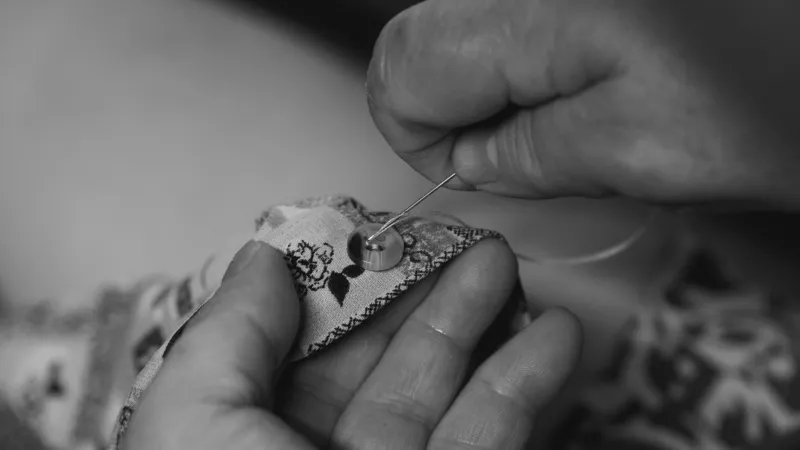
There is a sock in my desk drawer with a heel the color of old tea. The hole is not dramatic. It is a small, soft-mouthed opening near the ball of the foot, the kind you ignore until your toe finds it in the middle of a Tuesday. For weeks I meant to throw the sock away. Instead, I found a needle, some dark blue thread, and a wooden mushroom I bought at a craft store during a phase when I believed I would become a person who darns. Then I sat down and did the thing I had been avoiding: I stayed.
That is the part nobody puts on the craft-store packaging. Mending asks you to stay with something worn. Not to replace it, not to hide it, not to declare it broken and move on. Just to look at the thin place and decide it is still worth the trouble.
The Quiet Heresy of Repair
We live in a culture that treats replacement as the default. A hole in a sock is an inconvenience. A chip in a mug is a reason to buy a new set. A frayed edge on a favorite shirt is a small failure of upkeep. Somewhere along the way, repair became a chore for people with too much time, or a hobby for people with too much yarn.
But there is another way to read the worn place. In that reading, a hole is not an accusation. It is a record. The sock wore through because you walked. The shirt frayed because you reached. The button came loose because you wore the jacket enough to love it. Repair, then, is not an erasure of that history. It is a way of saying: this life happened here, and I am not ashamed of it.
This is why visible mending has always carried a little bit of quiet heresy. It refuses the idea that something must look untouched to be worthy. It lets the repair show. A row of stitches becomes a scar with intention, a mark of care rather than concealment. In a spiritual sense, that is not far from what many of us are asked to do with our own worn places: not to pretend they never happened, but to tend them with enough tenderness that they become part of the story rather than the end of it.
Why the Hands Can Settle the Mind
I am not going to promise that threading a needle will cure anything. But I will say this: repetitive handwork gives the mind a place to land. The stitch is small. The motion is simple. Pull the needle through, bring the thread across, make the next stitch. There is no notification, no headline, no unfinished conversation waiting in the background. There is only the fabric and the next small decision.
For a lot of people, that is enough to take the edge off. The nervous system likes rhythm. It likes a task with a clear beginning and a visible end. It likes the feeling of doing something with your hands that does not require you to be brilliant, productive, or even particularly good at it. You are not optimizing anything. You are just mending.
The first few minutes can be restless. The mind may offer its usual list of objections: this is pointless, this is slow, this will look messy. Let it talk. Keep stitching. Somewhere around the second or third pass, the objections tend to lose interest. The breath deepens. The shoulders drop half an inch. You are not meditating, exactly. You are doing something close: you are giving your attention a home.
Imperfection Is Part of the Lesson
My first darned sock looked like a small animal had chewed through the heel and then apologized. The stitches were uneven. The tension was wrong. One side puckered. I nearly unraveled the whole thing and started over, which is a very human response to imperfection: begin again, but only if it can be perfect this time.
Instead, I wore the sock. The pucker softened against my foot. The repair held. And I noticed something I did not expect: the imperfection made the sock easier to love. A perfect repair would have been impressive. The messy one was mine.
This is where mending becomes a teacher. It asks you to tolerate the gap between what you can imagine and what your hands can actually do. It asks you to let something be visible and still worthy. That is not just a craft lesson. It is a practice for anyone who has ever been tempted to discard a part of themselves because it did not heal neatly.
A Five-Minute Mending Ritual
You do not need a torn sock to try this. A loose button, a split seam, a small hole in a favorite shirt, or a hem that has given up will do. The point is not to finish the job. The point is to enter the practice.
Set a timer for five minutes. Gather a needle, thread, and the item. Sit somewhere without a screen in front of you. Before you begin, hold the worn thing in your hands for a few breaths. Notice where it has thinned. Notice what it has carried. If you like, say quietly to yourself: this was lived in.
Then thread the needle and make one stitch. Just one. Then another. Let the work be slow. Let it be imperfect. If you finish the repair, good. If you do not, that is also good. The five minutes are the ritual.
When the timer goes off, put the needle down and look at what you did. You did not fix a broken thing. You tended a lived thing. That is a different kind of work, and it is older than any marketplace.
The Soul Is Not a Throwaway Object
There is a reason this practice belongs in the mystic’s toolkit. Most of us carry some inner place that feels threadbare. We have worn through patience, or trust, or the belief that we are allowed to take up space. The culture around us often says: replace it, hide it, start over with a new self. But the older wisdom says: stay. Look at the thin place. Bring a small, ordinary thread.
A sock is not a soul. A stitch is not salvation. But the gesture is the same. Repair is not a rejection of what has been lived. It is a way of honoring it enough to keep going. And sometimes, sitting with a needle and a torn piece of fabric is the most honest prayer you can offer: I am still here, and so are you.